It’s all about wholeness.

The past couple years, the concept of wholeness has increasingly come to the forefront of my values and decisions. At the beginning of 2022, I invited numerous friends to share their thoughts about wholeness and you can find them here. I’ve also received several submissions from individuals who reached out to me with ideas for parenting and work. Their articles reflect wholeness values as well and also on my blog page.

In the past year, my wife and I have been going through some changes with regards to work. I resigned from a full time position and she’s retired. We’ve been fortunate with our health and exploring new rhythms, places, and activities. We’ve enjoyed numerous trips with and without our kids (who are in their 20’s) and we’ve been playing quite a bit of tennis. Although we’ve enjoyed it all, there’ve been and continue to be challenges, mentally, emotionally, relationally and physically.

Most recently, my right heel and ankle have been giving me problems. It’s taken over 2 months to heal and I’m finally close to being back to normal. Then a few weeks ago, I came down with covid and felt crappy for a few days. Symptoms went away after a few days but still tested positive on day 10.

Though we’re doing pretty well for the most part, on occasion we have our disagreements or things happen and we get upset at each other. At times, things get pretty intense and honestly, it’s a struggle.

But difficulties are ubiquitous. Our world has been suffering on many levels. The pandemic. Racial strife. War. And all this on top of the problems that plague all people in all places: universal needs for systemic change ie. economically, politically, corporately, environmentally, and on personal levels, psychologically, physiologically, and spiritually. We have all experienced these at some points in our lives. And so have those who’ve come before us as well and so will those who come after us.

How do we understand and effectively deal with chronic, systemic problems?

I’ve come across many polarizing voices and they may have good intentions but I don’t believe their messages and actions really solve much. Yet differing opinions and perspectives are important parts to effective, long term solutions.

From what I’ve gathered, the root of our problems is a lack of wholeness. For a wide variety of reasons, our head, heart, and body aren’t working together. When one or more members are disconnected from the others, neglected or mistreated, our lives are diminished, individually and collectively. End result is being stuck or worse, regressive and dysfunctional. Rather than contributing to positive systemic solutions, we become complicit to disintegration of our souls, families, work places, even our society. Lack of wholeness is endemic to many individuals and organizations. And it makes no difference their ethnicity, socio-economic status, sexual orientation, religion, political stance, profit or non-profit, etc. etc.

It’s all about wholeness.

Wholeness must be prioritized as a fundamental part of solutions. If not, our situations and problems just become cyclical and likely on a downward spiral. If we want to end this trajectory, we must commit to our own internal integration. If we want to truly benefit those we love, our own parts must be at peace, loving each other. If not, we cannot and will not be positively contributing to the true wellness of others, especially the ones closest to us.

Head, heart and body in healthy relationships with each other. How are yours doing?

Integrating the 3 is our soul at work becoming one with God and aligning with Love. It’s what our soul was made for: integration. This is the primary source of sustainability ie. eternal life. It’s about participating in the process of redeeming disorder through the reordering framework and process of divine love.

What is divine love? Let’s start with what it’s not.

Essentially it is not based on transactional presuppositions, a common default of how we love, ie. doing things for another person to express love. The Bible says the love of money is the root of all evil (1 Timothy 6:10). I’ve come to understand this to mean a loyalty to transaction based relationships is the source of all irreconcilable chaos and confusion in this world. Money is currency for transactions. Love of money is a heart attachment to this way of operations. We must be healed from this toxic dysfunction and love through an integrated state of being.

In addition, divine love is not only affection. It definitely involves and experiences great feelings of all kinds but it is much more. If our love is only based on affection and emotions, we will not experience the deep, freeing, powerful evolution that wholeness brings which is able to effect systemic change.

Love is the state of being whole. This is love’s source and primary expression.

Wholeness is a very broad and deep concept and it may even seem esoteric. But the fundamentals have to do with being present to reality and wholly engaging it. What we commonly do not realize is the power that habitual default beliefs (ie. schemas) have in derailing us from living and loving as well as learning from present reality. When this internal paradigm goes awry and wreaks havoc in our relationships, especially to ourselves, all kinds of hostilities, abuse, pathologies and injuries occur. Moreover, we become more and more disconnected from what is truly going on in the lives of others and ourselves.

Working on these deeper issues requires commitment and time, much like physical fitness training. We may have moments of clarity, inspiration, and motivation but changes only come after consistent actions that result from contemplation, aligned choices and actions over time. Also, integration is not something we just add to our calendars. Living in wholeness transforms our calendars so that our activities and inactivities reflect a stronger, healthier, more sustainable life.

So what do we do to grow in wholeness and how do we get started?

Contemplation is a basic essential:

  • The action of looking thoughtfully at something for a long time.

  • Deep reflective thought.

It’s spending time to get clearer about what is really going on internally and externally. This involves deeper and broader knowledge of self and others. It’s not settling for conclusions that were not honestly and fairly obtained through sincere, patient and humble communication with trust and vulnerability.

That’s a starter for our insides, our heart and mind. But we need to love our bodies too. Diet, rest, and exercise are the essentials and there’s a ton of content on them.

At this point, I just want to give some focus to stability and strength training as an effective means to greater wholeness. We want exercise that significantly, systemically improves us. This will come through regular core and strength building movement of local and global muscles.

Our skeletal muscle system of approximately 600 muscles is the organ of longevity.

Thriving in the second half of life will depend on the size and strength of our muscles, not simply cardiovascular fitness. Dr. Gabrielle Lyon has identified skeletal muscles are our our body’s largest endocrine organ. When meaningfully engaged through strenuous contractions, hormones are released that improve our body’s ability to metabolize nutrients. This important fact is radically connected to cardiovascular disease and pathologies like diabetes and obesity; these conditions involve an inability to regulate and utilize nutrients ie. carbs and fats. Dr. Lyon traces this to a lack of muscle/ muscular movement.

I recently got my physical trainer’s certification from National Academy of Sports Medicine and am ready to help you create and develop a program to improve stability and strength. From now until the end of June, I’m offering a complimentary assessment and program design to the first 20 of you who respond.

If you’re interested, please email me at FamilyConnectionsCoach@gmail.com and I’ll send you an assessment to complete and return. From there, we can work together to come up with a dynamic routine to cultivate better connections with your body. I look forward to hearing from you and partnering with you to become stronger and more integrated as we head into the back half of 2022 to ramp up for an awesome 2023 and beyond.

Am I suggesting strength training as the cure all? Yes and no.

Yes in that it’s an important place to start.

No in that it doesn’t stop there.

It’s about wholeness and the transformation that greater integration brings. We don’t know what that will be until we experience the radical changes from the inside out.

Bring your head, heart and body together and who knows what miracles and gifts Love will produce!

Thinking of Starting a Career in Healthcare? Expert Tips for Stay-At-Home Parents

(Photo via Pexels)

(Photo via Pexels)

By Clarence Wilkins

It isn’t uncommon to want to change careers in your late 20s, 30s, or 40s. In fact, CNBC reports that the average age at which people switch careers is 39. Those who have left the traditional workplace to become a stay-at-home parent may decide as their children start to get older that returning to work is the right option for their life circumstances. Instead of jumping back into the same field, many individuals will return to school to begin an entirely new career path.


If you are a stay-at-home parent who is considering starting a career in healthcare, review these helpful tips from Family Connections Coaching


Research career paths and degree programs

The field of healthcare is brimming with opportunities. With so many areas of study and expertise, the possibilities for your new career are truly endless. Nurses in particular are in high demand and can thrive in today’s field.


That is why it is essential to research career paths and degree programs of interest. Explore all possible options before settling on your final choice. If you haven’t been in school for a long while or if you remain undecided about what field is right for you, this is a fantastic place to start. 


Once you’ve completed the program, you can go on to others such as basic nursing assistant training. Plus, as the American Association of Medical Assistants notes, medical assistants are in high demand, which is fantastic for post-graduation employment. No matter what you choose, be sure that it is something you could see yourself doing for the long-term.


As you build your skillset, be sure you keep your resume updated. You’ll need it as you apply for internships and when you finally land the interview with a prospective employer. Fortunately, it’s easier than ever to create one by using free, online resume templates that allow you to enter all your information and choose from a number of different designs and color schemes. By using such a tool, you’re able to quickly download your completed resume so you can either print it out or send in digital form to whomever needs to see your creds. 


Establish a schedule that works for you and your family

Adding school to the mix of everything you do at home can be tricky at first. Obviously, time management is crucial. If you already feel like there aren’t enough hours in the day to complete your duties, it may seem like going back to school isn’t a feasible option.


Thankfully, with the flexibility offered in many degree programs these days, balancing parenting, household duties, being a partner, and schooling is possible. Before enrolling in a degree program, decide how you would want your days to flow. Do you only want to attend classes on specific days? Would the morning, afternoon, or evening be best for homework assignments? Planning a mock schedule will further help you choose the school and degree program with options that are right for you.


Earn your degree online for added flexibility

If in-person classes are a definite no-go for your schedule, don’t worry. You can opt to go back to school for a healthcare-related degree fully online. Doing this will give you an added layer of flexibility that isn’t possible with in-person classes.


By earning your online degree in healthcare, you can develop a host of relevant skills and experiences. Online programs include healthcare information management, nursing, health service coordination, and health leadership.


Take classes at a pace that suits your needs

When you become a new student, don’t feel like you need to take on a full course load. Although you may be tempted to do whatever you can to get through your chosen program quickly, you don’t want to overwhelm yourself (especially at the beginning).


In your first few semesters, take classes at a pace that is right for you. If in doubt, sign up for fewer class hours to err on the side of caution. Becoming overloaded with the responsibilities of life and school could put you at risk for dropping out of your program. Whether you take 10 credit hours or just two, your class schedule should revolve around your life and goals.


Another important thing to remember is how capable you are. Having confidence and a positive mindset going into your program can do wonders for your grades, mood, and motivation.


Family Connections Coaching partners with those who want to elevate their commitment to developing themselves, to lead with wisdom and love, at home and work. Set up your free consultation today!

Wholeness

by Stephen Shelnutt

“Be perfect, therefore, as your heavenly Father is perfect.” Matthew 5:48

What a tall order! It seems overwhelmingly impossible that we might be tempted to dismiss it as not serious. But if we are to take wholeness seriously, it would only be to our benefit to take the words and teachings of Rabbi Jesus seriously as well. And really, what’s more whole than perfection?

This statement comes from a context of other difficult, if not impossible, words of advice: “don’t even be angry, don’t even look at a woman lustfully, don’t even retaliate, and love those who hate you.” Slow down, Jesus, you’re asking too much of us simple humans! When we think of living the kind of life described in the Sermon on the Mount, we might think of it as a lofty ideal, but not something to seriously adopt since it’s too hard. But ask yourself: which life is really harder, one that is full of hatred and violence towards your fellow brothers and sisters, and they to you, or one that has no need for anger, violence, and hate because, well, what good is it anyways?

Considering the two alternatives before us, “be perfect, therefore, as your heavenly Father is perfect” is not a new command that we will be punished for if we fail to uphold it, but rather a practical word of advice, a small hint at living a peace and joy-filled life. Jesus knows that human flourishing and goodness and wellbeing can only happen when people let go of the things oppressing us and take on the things that generate goodness. In a sense, when we finally start acting like our heavenly Father, who is love, and deal with ourselves and each other as he deals with us, then things will finally be as they ought to be. What else is meant by “right-eousness”?

And to be fair, it is hard. We’re just used to doing things a certain way, it “can’t be helped.” Except, it can. It might take months and years of discipline of adopting a new character, one that naturally doesn’t get angry, etc., but it can be done. The curriculum for adopting this new character and way of life (discipleship) will likely look different for everyone, and we can certainly learn from other experienced students who are further along than we are. 

It will be a long and arduous journey (such is the journey to life [Matthew 7:14]), and we couldn’t possibly discuss it at length here. So I will only offer one word of advice, an exercise to help you get started on your journey. Ask yourself this: do you really need to hold on to those parts of yourself? Your anger? Your defending yourself in resistance to others? Your condemnation? Has a situation ever really been better because of your anger? Has anyone ever “finally got it” and become better after you’ve judged and put them down? Have you? Consider these things at length. Be honest with yourself and the situation. Don’t simply accept things for how they appear to be; dare to dream of what they could be. And may the patient God of peace and love and all goodness be right alongside you on your journey. Always. 

Stephen Shelnutt is the Children’s Ministry Director Intern at Christian Layman Church. He is currently interested in discipleship and spiritual formation and is reading every Dallas Willard book he can get his hands on.

A Little About Wholeness

By Tim Fortescue, FaithfullyGrowing.com

Wholeness is when we lovingly pick up our broken pieces with God's help and allow God who sees us as beloved regardless to gently put us back together again in new and transformative ways that we could have never imagined.

Some of the realities of growing up in Appalachia in a working-class family delayed me from realizing my full potential and knowing that I am a beloved child of God until later in my life. Because of what I've learned, I get excited about coaching and the impact that I can have on others as I help them realize their full potential and "belovedness." As I continue to learn and grow, I want to help others to do the same.

For nearly two decades, I have been involved in ministry leadership in the church, community, and seminary settings. During this time, I have been impacted by life coaches and mentors who have helped make my life better. The impact others have had on me has helped me to be able to coach and mentor other leaders and people of faith.

My goal is to help people re-imagine their life and faith. I have extensive experience in life, personal and spiritual development coaching. My individualized, proactive, positive approach helps my clients attain their goals that lead to living life to its fullest.  

I am a professionally trained and experienced coach and I hold a Doctorate in Ministry Leadership. I believe I have the tools and understanding to help people create the life they imagine and get a renewed sense of self.
When I'm not working I enjoy going to the zoo with my kids, beekeeping and spending time thinking "outside the box."

Wholeness: a Destination, Journey, and State of Being

By Jedeiah Esteves

In an attempt to describe what wholeness is, let’s first say what it is not. The fact that we are discussing/contemplating wholeness means that we are not whole. Faced with the living circumstances of being incomplete, unwhole, fragmented, torn, etc…, how can we ever expect to achieve this perfection (the ancient notion of completion)? If we have knowledge of this perfection - mainly from our imperfections - then do we not in a sense possess a fragment of it in us? 

Perhaps becoming whole is possible because the seed of wholeness is fundamentally rooted in our very being, and the temporal nature of our existence propels us toward a mature image of ourselves while this mature image - the whole - is always connected to the seedlike and immature until the proper time when one actively engages on the journey to reconcile that which is with that one ought to be. Wholeness is achieved through one’s state of being. Because a human person possesses an immortal soul, we have some very limited knowledge of eternity, the destination. Hence when we choose to begin this journey and orient ourselves towards the destination, the destination engages us, changes our state of being, and gives us miniscule drops of eternity within time. 

As St. Augustine of Hippo said “you have made it so O’ Lord, that we shall never rest until we truly rest in Thee.” To be whole/complete/perfected is to be at rest. If a person fails to recognize that he has an extemporaneous destination and a temporal journey, then his state of being will not be elevated and wholeness will not be manifested nor achieved in this lifetime.


6 Smart Tips for Parents Who Work Remotely

Image via Pexels

By Gwen Payne

If you are new to remote work or are looking to switch to a remote job, you may be wondering if it is possible with young children in the house. Fortunately, plenty of families make working from home functional by employing a few clever tricks. Work-life balance is possible, even when there isn't a clear separation of work and home. From mastering your workspace to caring for your mental well-being, here are six smart tips that can help you productively and peacefully work from home. 


Reach your relationship goals, become closer with your partner, and improve your parenting skills with coaching from Family Connections Coaching


1. Set Up Your Workspace

Whether you have a dedicated office or not, getting your work area set up properly is the first step to having a great experience working from home. Make sure to clear your space of clutter, as research shows it can distract your brain from the things you need to focus on. Combining good lighting and inviting touches like candles or an essential oil diffuser can help your space be more inviting and more conducive to getting work done. 


2. Create a Routine

Children need routines to feel safe and increase their likeliness to cooperate. Routines also take a lot of stress out of the day by providing you with a solid work schedule. Single parents can have breakfast with their toddler or baby and then hand off children to family or daycare. Or work while they are occupied with sleep or other activities. Spouses can trade work time, such as 4-hour work blocks, during the day. Remember to prioritize time together and strike a balance that works for everyone. 


3. Facilitate Activities That Don’t Require Supervision

Watching enriching children’s content or playing educational games can keep your child occupied and learning at the same time. There are also plenty of quiet, hands-on activities you can set up for your toddler while you work that won’t be loud and distracting. 


4. Use Your Support System

Friends and family are often more than willing to help shoulder some of the childcare load. This can provide you with more quiet time to get things done without worrying about your child’s immediate needs. It can be helpful to actively create a support system so you aren’t struggling to think of someone during emergencies. 


5. Delegate

If your current job has you taking on a multitude of tasks while working long hours, it might be time to consider hiring some freelancers to help offload some of your work. You can find and hire freelancers through online job boards. 


If you’re looking for budget-friendly options, you can locate capable foreign freelancers. For example, you can hire skilled workers in India by using a job board like Guru. When it comes to paying freelancers, realize that traditional methods like bank transfers can be cost-prohibitive. Instead, you can utilize a money transfer service like Remitly. For instance, if you need to pay workers from The Philippines, they offer near-instant transfers for only $3.99.


6. Plan in Advance

Planning as much of your schedule as early as possible will help the week go much more smoothly. Sunday meal-prep can make meals a breeze, and having a list of activities and purchasing necessary supplies in advance will mean everything you need is already at your fingertips. 


If working from home is new to you, it may seem impossible to balance everything and stay sane. Fortunately, it is possible, and many parents just like you have made it work. In fact, once they get their routine under control, many parents prefer the comfort and pace of remote work.


Resources to Help You Teach Your Baby, Child, or Teen Important Life Skills

Image via Pexels

By Clarence Wilkins

As a parent, one of your many responsibilities is to teach your little one important life skills that will help him or her to grow up to be a happy, respectful, secure, and self-sufficient adult. By creating a daily routine for your little one, for instance, you’ll help your child to build security, independence, and stability—three functional life skills that benefit children well into adulthood. To explore some of the things you’ll want to teach your child as he or she grows older and enters each new stage in life, review the resources below. 

Improve your parenting skills and increase your bond with your children with guidance from Family Connections Coaching. Get a free 30-minute consultation today!

Stability and Security

A daily routine will keep your child on pace with learning and life. 

  • 10 Reasons a Daily Routine Is Important for Your Child (and How to Set One)

  • Best Ways to Help Children Fall Asleep at Nap Time

  • How to Establish a Morning Routine for Kids That Actually Works

Compassion

Raise empathetic children with these age-appropriate tips.

Responsibility

Teaching your children to be accountable and responsible will set them up for long-term success.

Problem-Solving

By learning to solve problems, your child will be prepared for life and school. 

Modeling Self-Care

By caring for yourself and your needs, you’ll be a role model for your kids.


While stability, compassion, responsibility, and problem-solving are all critical life skills, your little one will also need to learn about the importance of good personal hygiene, time and money management, decision-making, and the differences between positive and negative social interactions with others. By helping your little one to develop these functional life skills, your child will have everything he or she needs to live a happy, healthy, and well-rounded life.


Wholeness

By Osama Almasri

My biggest regret would be not becoming whom I am created to be. However, how does  one come to know their purpose in a world where we have forgotten The Creator?  Purpose is birthed within. According to His Will, we have the authority to become. This  authority is given to us within the center of our wholeness, which I believe is The Holy  Spirit. I never knew what to call this until someone put it in terms that made so much  sense to me; The Kingdom within our body is The Holy Spirit which is Jesus and God,  and He makes our path clear. The Anchor ties us down to truth, love, hope, peace, and  wholeness. I know this is true because I was going through the motions for far too long,  where days felt the same, and I was trying to find my way through weak and worthless  elementary principles of this world where I was a slave because I was trying to be my  own god. Once I came to know God, or instead, He came to know me, did I find  wholeness. He taught me to surrender and become a friend. My hardest of heart was  persuaded, and the stranger I was became acquainted with The Voice that spoke one  word, and these dead bones came alive! He made me complete with every part of Him.  The Maker of the stars healed my scars, broke through the darkness, and shined  brighter than my sin, where I had no qualities to find favor, yet He made me more  remarkable because His grace is even more incredible! (All Glory to Him) The  wholeness I have found gave me purpose, for man was only made for this. In my mind, I  am still an addict, my flesh is not perfect, yet perfection is within me, and He makes me  new every day because it is only the Spirit that teaches me how to stay away from the  darkness and find peace. The Spirit is what keeps me from going back because who  can stand against Him? I had to learn to humble myself with God, do justice, and love  kindness, for this is all that He requires.  

Everyone has something to say, something to bring to the table, and it is at this table  that Jesus invites us to eat and share a meal with Him. Nevertheless, as I sat at that  table, I wanted to hear the stories of others and see how I could become more like  them. While it is a great thing to be on a path next to others and learn from them, I have  found that each person is unique, and what they go through may sound similar to my  story, but we are all on different paths. What works for one may not be the same for the  next. We all have a path set out differently for each of us. No two people are exactly  alike, and no story is the same. We are here together looking to hear from God, but  what someone else does may not be the same path God has in store for me. I can hear  them out and listen to their story, but I should remember that all I need is to be more like  Jesus. I lost my way, and now I am learning to listen to God's voice. Today I am  rebuilding on the truth's that are being spoken as promises to become my story; God  will sustain me, God's peace will guard my heart, God delights in my songs, God will instruct and teach me to go in the way I should go, God is my refuge and strength and  my help in times of need, in all things I am more than a conqueror because God loves  me! He will never leave me nor forsake me, it is in His perfect love that casts out all my  fears and that nothing can ever separate me from His Love. Most of all, God is not done  with me. As I become one with Him, I will in turn become one with others and learn to  broaden His Kingdom and not my own. Listening to God will bring me to find wholeness  and be at peace with all that is His purpose for me to be.  


A Family Resource Guide to Long-Term Care Planning

Gwen Payne

Photo Credit: Unsplash

Family Connections Coaching partners with those who want to elevate their commitment to developing themselves, to lead with wisdom and love, at home and work. Connect with us today! 


As we age, it becomes increasingly important for us to plan for our care as seniors. For some, this may mean staying in a nursing home or assisted living facility. Although it may be impossible to predict with certainty whether you will need long-term care, there are some lifestyle choices and personal family histories that make such a need more likely than others. Presented by Family Connections Coaching, these resources explain how to make decisions about long-term care, as well as how to prepare to pay for it.

Planning for Long-Term Care

Now’s the time to stop putting off planning for long-term care. CNBC notes that advisors recommend starting the planning process between 40 and 50 years of age.


Paying for Long-Term Care

One of the biggest hurdles to overcome is handling costs. It’s important to, first, research how much will be required depending on specific needs, then finding out how to pay for it all.

Long-term care is a difficult expense for families to anticipate, but these resources can help you and your family plan properly. When it comes to long-term care costs, investing can grow your retirement nest egg to provide for these expenses, and your home can also be a source of funding. Additionally, making healthy lifestyle choices can help reduce the need for a longer duration of care.


Wholeness and Shalom

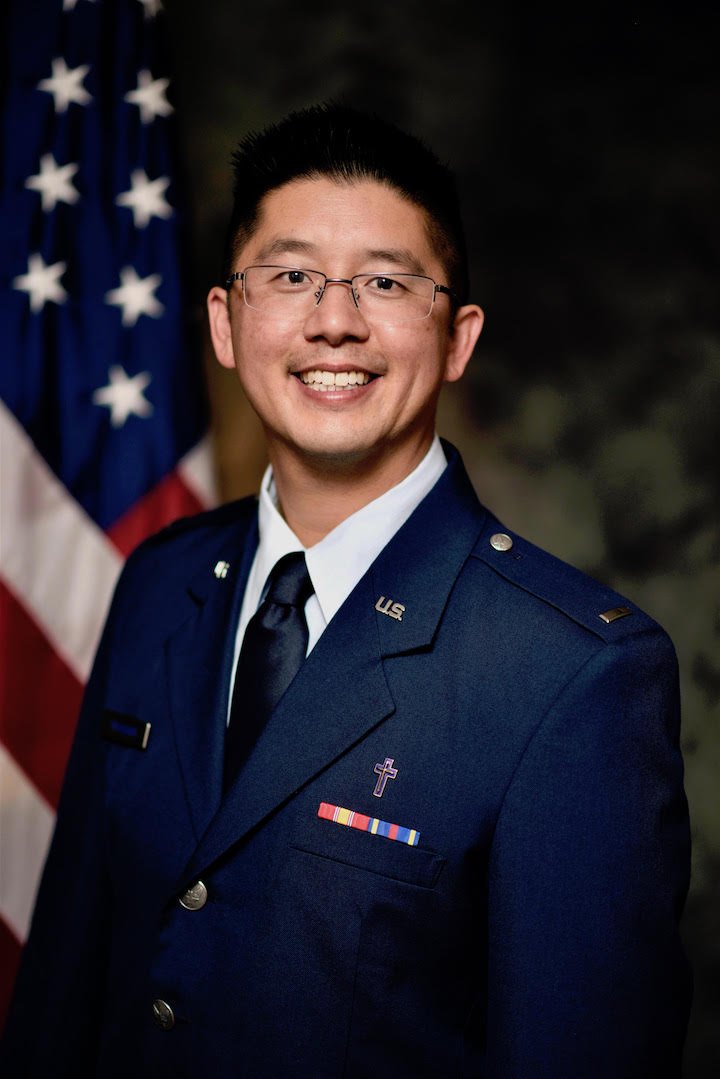
Ch, 1Lt Pira Tritasavit, USAF

Bio: Pira was born and raised in San Francisco, and recently moved to Oklahoma City with his wife Venus and 3 sons to join the US Air Force as a Chaplain. He has been a middle school and high school teacher, a keyboard player in a rock band, an instructional coach for several tech-ed start-ups, a life and marriage coach, and a fortune-cookie factory worker (true story). He earned his M.Div. from Western Seminary, and has authored and self-published two books on Amazon: "Haiku Bible" (2019) and "Sometimes a Grown-Up" (2021).


Wholeness and Shalom


The Hebrew greeting “Shalom” is often equated with the word “Peace”. 

However, “Shalom” can also be further translated as “harmony, wholeness, completeness, welfare, prosperity, tranquility”. 

What do “peace” and “wholeness” have in common? 


Think about it.

Can there be peace if the default state of things is separation, fracture, division, incompleteness?

Everyone desires wholeness and peace. 

Everyone desires shalom, whether they know the word or not. 

I am an Air Force chaplain, and today, as I’m writing this blog entry, I’m on day 3 of fighting a cough and cold, on bedrest in my pajamas, hoping that it’s not related to that dreaded virus which shall not be named.

I’m leaning on my wife (recovering from her own bout of sickness) to care for my 3 sons who are having a rough time downstairs.


Oh, how I need some shalom right now!

I need the wholeness of my physical body to be restored from the illness. 

I need the wholeness of my family to take care of one another.

I need the wholeness of my fellow chaplains to care for the ongoing work of our mission here on base to serve our airmen.

In the Air Force, we have a training model called the Comprehensive Airman Fitness program that encapsulates 4 areas: Mental, Physical, Social and Spiritual. 

(Yes, even in the military, spiritual fitness matters!)

In order to “build and sustain a thriving and resilient Air Force community, each area needs attention. Each area is deeply connected to the health of another, and if one area suffers, the other areas do, too. 

Mental fitness is more than just passing tests and earning academic degrees. It requires the whole mind’s ability to focus on learning and growing in knowledge, wisdom and application of ideas.

Physical fitness is more than just pushups, sit-ups and cardio to pass an assessment. Physical fitness requires a commitment and consistency to strength training and developing flexibility and healthy nutrition.

Social fitness is more than having social media connections, or collecting views and likes to boost egos and experience artificial fame. Social fitness requires positive relationships and deep connections that foster trust and safety. 

Spiritual fitness is more than just identifying as religious or saying a prayer every now and then. Spiritual fitness develops deep and enduring hope with purposeful meaning, and fosters a commitment to a greater cause than oneself especially in the face of difficulty. 

Comprehensive means complete, or whole. 

And in order to be complete and whole, the relationships between our mind and body, our interpersonal relationships with others, and ultimate relationship with God Himself, all need to be healthy.


We who are committed to defending our country from all enemies foreign and domestic, are seeking shalom – peace and wholeness.

And we who are followers of Jesus Christ can experience the truest kind of peace and wholeness that only comes from Our God and Father, our loving Creator and Savior, and our Counselor the Holy Spirit who calls us to turn away from division and separation as His enemies, and welcomes us into a loving and reconciled relationship of absolute shalom.  


May we all discover our true shalom in the One who created us and is Himself our Prince of Peace.

May we embrace the wholeness He provides through a new identity in Christ, finding our place in His family.


Shalom Y’all!