
Redefining Christology: The 7 "I Am" Statements as a Blueprint for Human Optimization

When we move beyond rigid, static dogma regarding a historical figure’s metaphysical makeup, Christology shifts from an external system of belief to an experiential, psychological, and evolutionary framework. Viewed through this lens, Jesus’ seven "I Am" statements in the Gospel of John are not exclusive claims to external divinity designed to demand worship. Instead, they serve as archetypal descriptions of the Awakened Self—profound psychological blueprints for how human consciousness connects to ultimate reality, establishes internal authority, and practices generative leadership.

7 Dimensions of Integrated Consciousness

1. "I am the bread of life"

(John 6:35)

The Source of Internal Sustenance. This shifts the locus of control from external validation (seeking "food" via status, approval, or material outcomes) to an internal, self-generating source of vital energy. The Christ-consciousness inherently satisfies deep existential hunger, building psychological resilience and grounded self-authorship.

2. "I am the light of the world"

(John 8:12)

Unconditioned Awareness. Light is that by which everything else is observed, possessing no rigid form of its own. This represents the "Observing Self"—the pure, non-judgmental awareness that illuminates thoughts, emotions, and external events, breaking the grip of automatic, shadowed reactivity and defense mechanisms.

3. "I am the door of the sheep"

(John 10:7)

The Threshold of Transformation. A door is a transitional, liminal space. It represents the psychological boundary line between operating out of ego-driven fear (the chaotic wilderness) and entering a state of psychological safety, alignment, and true community. Passing through the door means actively choosing vulnerability and presence over self-protection.

4. "I am the good shepherd"

(John 10:11)

The Archetype of Inner Leadership. This reframes the shepherd not as an external savior, but as the internal leader of our own fractured psyche. The Good Shepherd represents the calm, compassionate, and courageous core self capable of guiding, protecting, and integrating anxious, vulnerable, or reactive parts of ourselves without shame or judgment.

5. "I am the resurrection and the life"

(John 11:25)

The Continuous Cycle of Psychological Rebirth. The ultimate statement of adaptability and growth. It defines life not by the absence of crisis, but by the capacity to transform pain into purpose. Every time an old ego identity, a limiting belief, or a past narrative dies so that a more expansive, authentic version of ourselves can emerge, resurrection occurs in real-time.

6. "I am the way, the truth, and the life"

(John 14:6)

The Embodied Path of Radical Authenticity.

The Way: A dynamic process, practice, and trajectory of growth rather than a static destination.

The Truth: Living in direct alignment with reality as it is, stripped of illusion and defense mechanisms.

The Life: Pure vitality, presence, and being fully awake to the immediate moment. To embody this is to realize that the path is the goal.

7. "I am the true vine"

(John 15:1)

Radical Interconnectedness. The structural layout of relational intelligence and systemic unity. A branch cannot thrive on isolationist willpower; it must remain anchored to the systemic current. This speaks to our deep, organic connection to the whole of humanity and the cosmos. Operating from this awareness naturally produces "fruit"—empathy, generative leadership, and collective healing.


a Synthesis

In Hebrew, "I AM" (Ehyeh asher ehyeh) is the language of pure, active, unconditioned being. When mapped onto these seven metaphors, they cease to be theological litmus tests for orthodoxy or criteria for exclusion. Instead, they transform into seven distinct dimensions of human optimization and spiritual maturity. They demonstrate what it looks like when a human being is fully integrated, living from a place of deep internal authority, and profoundly connected to the systemic whole. This shifts the purpose of spiritual leadership from managing external beliefs from the outside to awakening this exact "I Am" architecture within ourselves and others.

How Parents Can Build Multiple Income Streams for Financial Freedom

by Judy Stephens

For busy parents balancing childcare, careers, and family budgeting, income dependency can feel like a practical choice until it becomes a financial risk. When most or all household income hinges on one job, one client, or one schedule, even a small disruption can ripple through bills, savings, and plans. Building multiple income streams isn’t about chasing hustle culture; it’s about creating financial stability that holds up when life gets expensive or unpredictable. The goal is a household cash flow that can absorb change and keep the family’s priorities funded.

Understanding Multiple Income Streams

Multiple income streams means your household money comes from more than one source, so one setback does not wipe out the whole plan. For parents, it often combines business ownership income, investment income, and side-hustle earnings. Investment income can include dividends, interest, or real estate, while the passive income definition highlights that some streams require less ongoing effort after setup.

This matters because diversification can smooth out the ups and downs of life with kids, like reduced hours, school breaks, or surprise expenses. It also lets you build stability without needing a single job to do all the heavy lifting.

Think of it like a three-legged stool: a paycheck, a small online business, and steady investments. If one leg wobbles, the other two keep your budget standing. Many families already think this way, with 27 percent of American adults taking on side jobs alongside full-time work. One practical example is eBay reselling, starting small and formalizing as it grows.

Grow eBay Reselling Into a Legit, Sustainable Small Business

Once you understand how multiple income streams reduce financial pressure, it helps to focus on options that can grow steadily with consistent effort. In fact, eBay reselling can be a practical source of additional income for parents who like retail and online commerce. The basic model is straightforward: source products, spot profitable resale opportunities, and list and sell those items through online marketplaces. Where it becomes “real” as a business is in the details, finding reliable inventory sources, building pricing strategies that reflect fees and competition, and managing shipping logistics so orders go out accurately and on time.

To keep reselling sustainable, you also need to understand demand inside specific product categories. That means paying attention to what buyers are actually searching for and what similar items are selling for, not just what you can find locally. Reselling isn’t passive; it requires ongoing effort and market research to avoid tying up money in slow-moving inventory or underpricing items.

As revenue grows, many sellers start thinking about a more formal setup to protect the income stream, and resources to explore your options can help you understand what that transition can look like. From there, the goal is to choose two to three parent-friendly revenue sources that fit your time, cash flow needs, and tolerance for ongoing hands-on work.

Build a Parent-Friendly Plan to Add 2–3 Revenue Sources

Multiple income streams work best when they’re designed around family capacity, not hustle culture. Use the steps below to choose 2–3 revenue sources you can manage consistently, then grow them in a way that supports (not competes with) your household.

  1. Pick one “stable,” one “scalable,” and one “flex” stream: Start by assigning roles. A stable stream is predictable (extra shifts, consistent freelance retainer); a scalable stream can grow (like eBay reselling when you reinvest profits and tighten operations); and a flex stream fits odd pockets of time (small digital tasks, seasonal work). This mix reduces stress because you’re not relying on three unpredictable sources at once.

  2. Match skills to earning potential with a simple scorecard: List 6–10 options you could realistically start in 30 days, then score each 1–5 on four factors: (a) hourly earning potential, (b) schedule control, (c) startup cost, and (d) learning curve. Parents often overvalue what they enjoy and undervalue what they can do efficiently; the scorecard makes tradeoffs visible. If two ideas tie, pick the one that strengthens a skill you can reuse across streams (writing, sales, bookkeeping, basic design).

  3. Set “household” goals, not just business goals: Decide what the extra income is for and put a timeline on it: “$400/month to accelerate debt payoff,” “$1,000/month to rebuild savings,” or “$5,000 by December for a business cash buffer.” Tie each stream to a target and a job, such as using reselling profits to fund inventory and shipping supplies while freelance income covers a specific bill. Clear goals prevent the common trap of growing revenue without improving financial freedom.

  4. Time-block around your real week, and cap it: Choose a weekly maximum (often 5–10 hours total to start) and assign fixed blocks: two 60–90 minute “deep work” sessions and one short admin session. For eBay reselling, that might look like listing on Tuesday/Thursday evenings and packaging on Saturday morning. Treat the cap as a safety rail; if a new opportunity requires more time, it must replace something else.

  5. Separate money flows and automate the boring parts: Give each income stream its own simple tracking system: revenue, direct expenses, and “owner pay” transfer to the household. Automate recurring household bills so your side-income doesn’t get eaten by missed payments, automatic payments for utilities can reduce the mental load and help you consistently deploy profits toward goals. When reselling grows, this same separation makes it easier to justify formal business steps like dedicated accounts and better recordkeeping.

  6. Review monthly and prune aggressively: Once a month, spend 30 minutes checking three numbers per stream: hours worked, net profit, and stress level. If something is profitable but chaotic, tighten the process (batch work, raise rates, simplify offers); if it’s low-profit and high-friction, pause it for 60 days and reallocate time to your best performer. This habit keeps multiple revenues from quietly taking over family bandwidth and makes your work-life boundaries easier to defend.

Parents’ Top Questions About Multiple Incomes

Q: How do I add income streams without sacrificing family time?
A: Start with a hard weekly limit and protect it like an appointment. If a new gig regularly breaks your limit, it is not “extra income,” it is a schedule change. The fact that work-life balance drives workplace well-being for many people is a good reminder to prioritize capacity, not just cash.

Q: What if one stream dries up or gets inconsistent?
A: Reduce dependence by mixing predictable work with something that can grow over time and something flexible. Keep a small cash buffer from each payout until you reach one month of side-income expenses.

Q: How much money should I invest before I know it will work?
A: Cap startup spending to an amount you can lose without stress, then earn the right to reinvest with profits. Choose options that can start lean, using existing skills and tools.

Q: When should I quit a stream that “isn’t worth it”?
A: Quit when it repeatedly fails one of three tests: net profit, time cost, or stress on the household. Replace it with a simpler offer, higher pricing, or a pause while you regroup.

Q: How do I plan for taxes and long-term goals with several incomes?
A: Set aside a percentage of every payment immediately and track income and expenses per stream. Then route “owner pay” toward one clear goal at a time, like debt payoff or emergency savings.

Take One Step Toward Diversified Family Income This Week

Parenthood already stretches time and energy, and relying on one paycheck can make every surprise expense feel louder. The steadier path is a long-view mindset: building sustainable income through diversified income streams at a pace that fits real family life. Over time, the diversified income benefits add up to more financial flexibility, less stress in lean months, and long-term stability that supports parental financial empowerment. Multiple income streams turn uncertainty into options for your family. 

How to Maintain Personal Growth and Progress Without Burning Out

By Adam Cook

Personal development beginners often get trapped in a start-stop loop: a burst of motivation, a strict new routine, and then frustration when life gets busy and progress fades. The core tension is real, wanting meaningful change while running into sustainable self-improvement challenges like inconsistent energy, unrealistic expectations, and the guilt that follows missed days. Over time, that cycle can turn into burnout in personal growth, where even helpful habits start to feel like pressure. A steadier approach built around long-term motivation strategies helps the self-improvement audience keep moving without crashing.

What Sustainable Personal Development Really Means

Sustainable personal development means you improve in ways you can keep up, even on hard weeks. It favors steady actions over big overhauls, so your progress does not depend on perfect motivation. One clear definition is progress without burnout, built through small, meaningful steps and supportive systems.

This matters because intensity is easy to start and hard to repeat when work, family, or stress hits. Consistency builds trust in yourself and makes habits feel lighter over time. That endurance is what turns self-improvement into real change.

Think of it like brushing your teeth. Two minutes daily beats a two hour cleaning once a month. Growth works the same way when your routine fits your real life. That foundation makes SMART goals, self-care, mindfulness, time management, and learning from setbacks feel doable and steady.

Use 7 Practices to Improve Without Overdoing It

Sustainable personal development is about steady progress you can repeat, not occasional bursts that cost you days (or weeks) of recovery. These practices help you keep growing while protecting your energy.

  1. Set one SMART goal at a time: Pick a goal that’s Specific, Measurable, Achievable, Relevant, and Time-bound, then write it as one sentence (example: “Walk 20 minutes after lunch, 3 days a week, for the next 4 weeks”). Keep it small enough that you can do it on your worst week, not your best. Goal-setting strategies can improve performance over time, and goal-setting intervention groups have outperformed control groups in research, so it’s worth doing this thoughtfully.

  2. Build a “minimum viable plan” for busy days: Decide your non-negotiable version of the habit (5 minutes of reading, 10 squats, one journal paragraph). This protects consistency, the foundation of sustainable growth, without pretending every day has the same capacity. When you have extra time, you can always do more, but you won’t lose momentum when life gets real.

  3. Make self-care routines scheduled, not optional: Choose 2–3 basics that keep you functioning: a bedtime window, a real meal, and a short walk or stretch. Put them on your calendar like appointments and treat them as the “fuel budget” that makes growth possible. If it helps, use a simple checklist like a self care tracker template to cover physical, emotional, mental, social, and spiritual needs without overcomplicating it.

  4. Do a 2-minute mindfulness reset: Once a day, pause and do this: inhale for 4, exhale for 6, repeat five times, then name one feeling and one need (“I feel tense; I need a break”). This reduces the chance you’ll push through warning signs and crash later. It also builds self-awareness, which makes goal adjustments feel like smart decisions instead of “quitting.”

  5. Use a weekly time block with protected recovery: At the start of the week, pick three 30–60 minute blocks for your priority goal and two blocks for rest or fun. This simple time management skill prevents your “growth” time from stealing from sleep, relationships, or downtime. If you miss a block, reschedule it once, then move on, so planning stays supportive, not punishing.

  6. Turn failures into data in 5 minutes: After a slip, write: What happened? What triggered it? What’s one change for next time? Example: “Skipped workout because I worked late → trigger: no plan for evenings → change: morning workout clothes laid out.” This keeps you learning from failures without spiraling into self-criticism.

  7. Balance growth across life areas with a simple wheel check: Rate 1–10 for health, work/school, relationships, and personal meaning once a month. Choose the lowest area for your next small improvement so you don’t overdevelop one area while another collapses. If you want a gentle pace, try one achievable goal each month so your progress stays realistic.

Common Questions About Growing Without Burnout

Q: How can I set realistic and achievable personal development goals to avoid feeling overwhelmed?
A: Pick one priority and define success in a way you can repeat on your hardest week. Start by naming your biggest friction point (time, energy, confidence, or clarity), then shrink the goal until it feels almost easy to start. A helpful check is writing a one-page visual reminder with your goal, the “minimum version,” and when you’ll do it, like by creating your printable poster.

Q: What are effective ways to incorporate self-care into a busy daily routine without feeling guilty?
A: Treat self-care like maintenance, not a reward you have to earn. Choose two tiny non-negotiables (like a consistent bedtime range and a real lunch) and attach them to existing routines. If guilt shows up, remind yourself that recovery protects your ability to show up for others.

Q: How can mindfulness and meditation support long-term progress in personal growth?
A: Mindfulness helps you notice early signs of overload so you can adjust before you crash. Keep it practical: one minute of breathing, then label one feeling and one need. That small pause makes your choices more intentional and your progress more sustainable.

Q: What strategies help maintain motivation and momentum when facing setbacks in personal development?
A: When you slip, switch from self-judgment to problem-solving and ask what changed in your schedule, stress, or support. Knowing the next step that moves this forward can help you restart with one doable action today. Then update your one-page reminder so the plan fits real life, not an ideal week.

Q: How can coaching from Family Connections Coaching assist me in balancing personal development with family and career responsibilities?
A: Coaching can add structure when you are trying to juggle priorities and keep falling back into all-or-nothing cycles. A coach can help you identify your friction points, build a realistic weekly rhythm, and set up accountability that feels supportive instead of pressuring. You also get a place to troubleshoot setbacks quickly so you keep moving without burning out.

Habit Stacks That Keep Growth Sustainable

Habits work best when they are simple enough to repeat and specific enough to track. Use these as a menu and build consistency through existing habit or routine triggers so growth continues without draining you.

Two-Minute Morning Check-In

  • What it is: Write one priority, one worry, and one tiny next action.

  • How often: Daily

  • Why it helps: It turns vague pressure into a doable plan.

Midday Energy Reset Walk

  • What it is: Take a 5 to 10 minute walk after lunch.

  • How often: Daily

  • Why it helps: It lowers stress and restores focus for the afternoon.

“Minimum Version” Session

  • What it is: Do the smallest version of your growth task for five minutes.

  • How often: 3 times weekly

  • Why it helps: It protects momentum on low-energy days.

Weekly Review and Rebalance

  • What it is: Review wins, adjust one habit, and schedule the next week.

  • How often: Weekly

  • Why it helps: It prevents overcommitting and reduces burnout risk.

One Relationship Deposit

  • What it is: Send one encouraging text or voice note during a routine moment.

  • How often: Weekly

  • Why it helps: Strong support systems make setbacks easier to handle.

Keep Personal Growth Steady Without Sacrificing Your Well-Being

It’s easy to want big personal growth and end up pushing so hard that energy, relationships, and motivation run dry. The steadier path is consistent personal development built on balanced self-improvement, small habits, realistic expectations, and support that keeps long-term commitment strategies sustainable. With that approach, progress starts to feel calmer and more reliable, and setbacks become course-corrections instead of proof you’ve failed. Grow slower than your ego wants, but faster than burnout allows. Choose one habit stack to practice for the next 30 days and, if accountability would help, consider structured coaching like Family Connections Coaching with certified life coach Cecil Wong for clarity and healthier work-family-personal balance. This matters because empowered, supported growth builds resilience that lasts in real life.

Rainy-Day Gift Projects Kids Can Make (That Family Members Will Actually Treasure)

By Judy Stephens

Rainy days can leave parents searching for ways to keep kids busy without turning to screens. Rainy-day craft projects for kids offer a simple solution: they keep children engaged while helping them create heartfelt gifts for family members. When kids turn everyday materials into something meaningful, they practice creativity, patience, and kindness all at once.

These projects work well for different ages, require minimal supplies, and can usually be completed in a single afternoon.

Quick Takeaways for Parents

  • Rainy-day crafts can double as meaningful gifts for grandparents, siblings, or neighbors.

  • Most projects can be made with household materials like paper, jars, markers, and glue.

  • Kids often enjoy creating gifts more when they know exactly who will receive them.

  • Short, simple projects prevent frustration and help younger children stay focused.

  • Even imperfect crafts can become cherished keepsakes for family members.

5 Simple Gift Projects Kids Can Make

These ideas are low-cost, creative, and flexible depending on your child’s age.

  • Handprint Art Cards
    Paint a child’s hand and press it onto cardstock to make animals, flowers, or butterflies. Add a handwritten message.

  • Decorated Photo Frames
    Use cardboard or craft sticks to build a frame and decorate it with stickers, paint, or buttons.

  • Kindness Jars
    Kids fill a small jar with notes about why they love the person receiving it.

  • Homemade Bookmarks
    Laminated drawings or decorated cardstock bookmarks make great gifts for readers.

  • Memory Collage Posters
    Kids cut out pictures from magazines or print photos and glue them onto poster board.

Turning Rainy-Day Art Into a Year-Round Gift

Some rainy-day creations deserve to last longer than a single afternoon. A fun option is helping kids turn their artwork and photos into a gift people can use every day. One idea is creating a personalized calendar that features drawings, crafts, or family photos for each month.

Kids can scan their artwork or photograph their crafts and arrange them into a calendar layout for grandparents or relatives. Many online platforms make this process simple: you choose a template, upload images, and customize layouts, captions, and decorations before ordering. It’s also worth choosing a service that offers high-quality printing and multiple size and format options so the finished calendar feels like a special keepsake. Parents can explore options for creating a personalized calendar that showcase kids’ creations all year long.

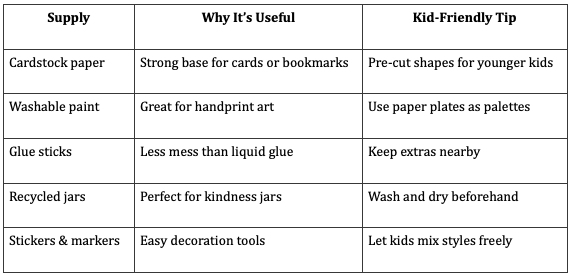
Quick Craft Supply Guide

How to Help Kids Turn Crafts Into Gifts

Follow this simple approach to make the activity smoother and more meaningful.

1. Pick a recipient first
Ask your child who they want to surprise. Knowing the recipient often sparks better ideas.

2. Choose a manageable project
Short projects prevent boredom and keep excitement high.

3. Gather materials beforehand
Having everything ready reduces interruptions and keeps momentum going.

4. Encourage personalization
Kids can add names, drawings, or favorite colors that match the person receiving the gift.

5. Celebrate the finished project
Take a photo of the craft and talk about how the recipient might react when they see it.

Find More Rainy-Day Craft Inspiration

If you’d like more ideas to keep kids engaged indoors, Crayola’s craft activity library offers a wide collection of kid-friendly projects that use simple supplies like paper, markers, paint, and recycled materials. Many of the activities include step-by-step instructions and are organized by age group, making it easier for parents to find something that fits their child’s skill level.

FAQ: Rainy-Day Crafts for Kids

What age group can do these projects?
Most projects can be adapted for ages 4–12. Younger kids may need help cutting or assembling items.

How long should a rainy-day craft activity last?
About 30–60 minutes works well for most kids. Shorter sessions prevent frustration.

What if my child loses interest halfway through?
Keep projects flexible. Even unfinished crafts can still become gifts with a little help.

Are these projects expensive?
Not usually. Many use recycled materials or items you already have at home.

Rainy-day crafts give kids more than just something to do—they help them create meaningful gifts for the people they love. With simple materials and a little guidance, children can turn a quiet afternoon indoors into something memorable. The best part? Family members often treasure handmade gifts far longer than store-bought ones. And the process of making them can become a rainy-day tradition of its own.

The Bible: A Context for Christmas: a lesson for Wholeness

Merry Christmas! 2025 has been a year of traveling, and lots of learning. Tennis, fishing, mobility training along with ongoing growth in wholeness have continued to expand and deepen my soul.

I’ve been wanting to write an updated synthesis of the Bible for quite some time and my discussion with Google’s Gemini helped me compose this summary highlighting the journey from fragmentation (the kings) to integration (Christ), using a framework of emotional health and wholeness. I hope you find it interesting and encouraging in your spiritual growth.

The Trajectory of Wholehearted Leadership

The entire biblical narrative, from the rise of ancient kings to the advent of the heavenly kingdom, serves as a progressive instruction manual on Soul Integration and the Emotional Health required for wholehearted leadership.

The Old Testament presents a lengthy study in Disintegration. The kings' lives—marked by fear, envy, and the desperate need to "armor up" (Saul's paranoia, David's cover-up, Solomon's eventual self-indulgence)—demonstrate that power exercised from a place of emotional depletion and inauthenticity inevitably leads to fragmentation, both in the leader's soul and in the community.

  • Prophetic Wisdom as Clarity: The prophets acted as courageous truth-tellers, embracing Brené Brown's principle that "Clear is Kind, Unclear is Unkind." Their relentless, sharp communication was not punitive, but a profound act of kindness—a clear, honest intervention designed to halt the nation's self-destructive path and call the leadership back to integrity (alignment of action and soul).

The narrative culminates in the New Testament with Jesus Christ, who embodies the ultimate model of Emotional Wholeness and Integration.

  • Wholehearted Kingship: Jesus's leadership is characterized by a radical commitment to vulnerability and authenticity. He operates not from a position of control, but from a profound internal wholeness. He chooses a path of service and exposure, demonstrating that true power flows from a grounded, connected internal state. The "King of Kings" teaches that authority is not about domination, but about attunement—being fully present and connected to the needs of others.

  • The Ultimate Implication: The trajectory toward the "heavenly kingdom" is, therefore, a call to a new state of being. It implores all people, especially those in leadership, to drop the emotional armor, engage in the vulnerability of genuine connection, and pursue the wholeness that comes from aligning one's actions, heart, and spirit with principles of justice, truth, and compassion. The ultimate wisdom is realizing that the health of the community is always a direct reflection of the emotional health and integrity of its leaders.


When you look at the entire Bible, you see a narrative primarily about kings and how they ruled. And from that central focus, it is not far fetched to conclude its purpose is to teach us how not to lead and point us to the way aligned with the creator: a way that creates space for personal growth and development for people to become whole as God is whole. 

It’s also important to note the diversity of the Bible’s authors which give us a deep rich perspective of many individuals. For its only when we have many different viewpoints can we get closer to what is true and real. 

The Bible starts with a divine Creator who made people in his image. Then it gets into origins of families, tribes and nations that God has relationships with. Laws, infrastructure and rituals are given: a code intended to cultivate an identity revolving around oneness with the Creator through forgiveness of sin. 

Much of the Old Testament recorded the Israelites’ evolution from being freed slaves to having their own monarchy and eventually its demise. It is recorded how all the nations leaders failed to cultivate and manifest a people governed by a spirit of wisdom, love, peace and freedom. They were consistently derailed by corrupt, fear based politics. 

In the New Testament, we see a person who preached about the kingdom of heaven and healed the multitudes. This kingdom reflected the expansiveness of the sky, creating spaciousness and freedom. This is the true source of love , joy and peace because it works against oppression and fear based loyalties and priorities. The healing this person performed represented what needed to happen for governance to by sky-like. Only when people are made whole will they live, love and lead in and towards freedom. 

The entire narrative is intended to foster reimagining of what leadership can be and do. If we use the Bible as it is intended, we should be led to rethink what matters most to be humans who are meant to live and lead according to the divine image. And what matters most is how we exercise power and authority in whatever spheres we find ourselves. 

Another interesting thing to note are the wisdom books placed in the center of the canon. These poetic writings exercise the creative and emotive parts of our brain. I believe this to be intentional to balance the often left brain heaviness of most leaders. Without integration of both brain spheres, people will remain stuck in governance that misses wholeness. Most notably is the book of Psalms: a collection of numerous author’s thoughts given to model metacognition. This significance cannot be overstated because it is the gateway to true humility. Creating distance from our thoughts is fundamental to seeing ourselves more clearly so that we might see what is true and real. And this is where we start living according to the kingdom of heaven. From the spaciousness of this practice, we can choose courage, humility and wisdom to cultivate wholeness and freedom. 

Without a strong, consistent focus on this big picture of leadership and the purpose of developing soulful, integrative leadership, the Bible is misunderstood, misused and misapplied causing people to remain stuck in smallness, pettiness and chronic dysfunction. 

This Christmas, as we contemplate and celebrate the Baby in the manger, may we receive the humility so fully revealed in Christ to be open to new learning that we would progress to “get it right” rather than stay stuck believing “we are right.” The source of Christmas is wholeness. The trajectory of Christmas is wholehearted leadership. The result of Christmas is a life filled with spirit (the invisible life force, energy, animation of existence).

Tips for Starting a Profitable Business from the Comfort of Home

By Adam Cook

Image by Freepik

Happy 2025! I’ve got another great article from guest blogger Adam Cook of Addictionhub.org. In this article, Adam shares wonderful ideas and insights that can help us create new and different spaces for greater thriving and flourishing as we take another trip around the sun. He pretty much covers the primary things to consider to start an at home business. I hope you find this interesting and helpful.

In warmth,

Cecil


Tips for Starting a Profitable Business from the Comfort of Home

Launching a home-based business blends personal ambition with the demands of family life, creating both opportunities and hurdles. A home setting fosters flexibility, enabling individuals to pursue ventures that match their expertise and interests. From offering consulting services to running an online store, there are countless paths to explore. Success often hinges on choosing an idea that complements routines while tapping into talents. Balancing these elements can turn a simple concept into a thriving enterprise.


Empower Your Business Journey from Home

Investing in your education can be a game-changer. By looking into the benefits of an online business degree, you can sharpen your business skills in areas like management, leadership, and marketing. This flexible learning option allows you to balance your studies with family commitments, enhancing your understanding of business operations and boosting your confidence to launch and manage your own enterprise.


Harmonizing Business Goals with Parenting Duties

Balancing business aspirations with parenting responsibilities requires careful planning. Evaluate the time you can realistically dedicate to your venture each week. For instance, if you have about 10 hours to spare, consider starting a freelance writing or virtual assistance business. These options offer flexibility and can be scaled according to your availability. Additionally, assess your financial resources to ensure they align with your budget, allowing you to choose a business idea that complements your lifestyle.


Collaborative Ventures for Stay-at-Home Parents

Teaming up with other stay-at-home parents can be a powerful strategy. By pooling your skills and resources, you can create a venture that benefits from shared expertise, potentially lowering startup costs and increasing efficiency. For example, one parent might excel in marketing while another has a knack for product design. This collaborative approach not only enhances the business’s potential for success but also fosters a supportive community, crucial for balancing work and family life.


Understanding Legal Essentials for Home-Based Businesses

Navigating the legal landscape is crucial when starting a home-based business. Familiarize yourself with local zoning laws to ensure your business type is permissible in residential areas. These regulations can vary, so check with your city or county clerk’s office for specifics. Additionally, secure the necessary permits and licenses to operate legally and avoid penalties. Understanding the tax implications of running a business from home is also essential for financial planning.


Start Your Eco-Friendly Cleaning Business from Home

Launching an eco-friendly cleaning service can be a rewarding opportunity. By focusing on reducing electricity and water usage while enhancing air quality, you can attract environmentally conscious clients. Offering a satisfaction guarantee and donating a portion of your fees to charity can further distinguish your business. This approach not only sets you apart in a competitive market but also positively impacts the environment.


Starting Your Home-Based Holistic Health Business

A holistic health consulting business offers a flexible work option for stay-at-home parents. By incorporating practices like aromatherapy and herbal remedies, you can provide tailored wellness solutions. Identify a niche within holistic health that resonates with your skills and interests to distinguish yourself in the wellness community. Craft a detailed business plan and familiarize yourself with the legal requirements in your area. Connecting with other wellness professionals and leveraging digital platforms for marketing can help greatly expand your reach and impact.


Funding Strategies for Stay-at-Home Entrepreneurs

Understanding diverse funding options is key to starting your business. Explore government-backed loans for favorable terms, or consider crowdfunding platforms to gain capital and validate your business idea. Traditional routes like grants and loans tailored to specific industries or minority-owned businesses can also offer essential support. Assess your needs and financial history to identify the most suitable path.


Building a home-based business as a stay-at-home parent requires balancing ambition with daily responsibilities. Aligning the business model with personal needs and strengths can create a seamless fit with family life. Exploring creative ideas and fostering collaboration can enhance the growth and sustainability of the venture. Flexibility and adaptability often play a critical role in overcoming obstacles along the way. Pursuing a meaningful business can bring both personal satisfaction and financial stability.

Discover transformative coaching with Family Connections Coaching and unlock the potential of your relationships and personal growth today!

Fostering a Love of Learning: Tips for Parents to Inspire Lifelong Curiosity

By Adam Cook

Image via Pexels

Closing out 2024, I’ve got another great article from guest blogger Adam Cook of Addictionhub.org. I love his multifaceted approach to encourage kids to be open and inspired to learn and grow throughout their lives. Wishing you and your family all the very best for this Christmas season and 2025!

_________________________________

Fostering a Love of Learning: Tips for Parents to Inspire Lifelong Curiosity

By Adam Cook

Children are naturally curious, driven by an innate desire to explore and understand the world around them. However, nurturing this love of learning requires thoughtful guidance from parents. By encouraging exploration, celebrating their interests, and creating a supportive learning environment, you can help your child view education as an exciting and rewarding journey. These intentional efforts ensure that curiosity and enthusiasm for discovery remain central to their growth and development.

Creating a Space for Celebrating Learning

Designating a special area to showcase your child’s work and achievements can greatly enhance their confidence and passion for learning. By involving them in the selection of pieces to display, you not only recognize their individuality but also promote a sense of ownership over their educational journey. This method emphasizes the significance of the learning process, including drafts and revisions, and encourages children to view mistakes as valuable learning experiences. Regularly updating the display ensures it reflects their evolving skills and interests, fostering a lifelong love of learning.

Modeling a Disciplined Love of Learning

Inspiring a lifelong love of learning in your children is one of the most rewarding gifts you can offer as a parent. Your enthusiasm for education can be a powerful influence, demonstrating the joy and importance of continuous learning. If you’ve been considering furthering your own education, pursuing an online accounting degree offers the flexibility to study at your own pace, making it ideal for balancing with other responsibilities. This path not only enhances your professional skills but also sets a strong example for your children, inspiring them to pursue their educational goals with passion and dedication.

Getting Some Professional Assistance from a Life Coach

Sometimes, maintaining a child’s love of learning requires addressing emotional or familial challenges that may hinder their growth. Family counseling can play a vital role in creating a positive environment where children feel supported and motivated to thrive academically and personally. Working with experts like Family Connections Coaching can help families develop strategies to communicate effectively, resolve conflicts, and build stronger bonds.

Fostering a Balanced Approach to Screen Time and Learning

In today’s digital world, finding a balance between screen time and activities that promote active learning is essential for nurturing your child’s love for learning. Establishing a routine, such as allowing screen time for 30 minutes before dinner, can help manage expectations and reduce requests for screens at other times. Encouraging hobbies like crafts or playing with a pet not only provides a break from screens but also enhances creativity and problem-solving skills. By modeling healthy screen habits yourself, you can inspire your children to engage more in non-screen activities.

Cultivating a Love for Language and Imagination Through Storytelling

Engaging your child in storytelling and reading activities is a dynamic way to enhance their language skills and ignite their imagination. By reading aloud, you introduce them to new vocabulary and narrative structures, essential for developing literacy skills. Choosing age-appropriate stories with engaging plots and characters can make this experience both educational and enjoyable. Additionally, incorporating props like puppets or costumes can make stories more vivid, helping children to better grasp the content and express their creativity.

Nurturing Your Child’s Passion Through Extracurricular Activities

Identifying your child’s natural interests and talents early on is essential for choosing extracurricular activities that truly engage them. By focusing on what they naturally enjoy, you can help them participate in activities that not only develop their skills but also maintain their enthusiasm for learning. This approach reduces the likelihood of overwhelming them with activities that feel like a chore, ensuring their free time is both productive and enjoyable. Also, supporting your child’s unique interests fosters a love for learning that extends well beyond the classroom.

Encouraging Learning with Constructive Feedback

To nurture a lifelong love for learning in your child, try offering holistic feedback that highlights not only academic progress but also social skills. This approach is supported by the constructivist theory of learning. For instance, consider so-called feedback sandwiches, where positive comments are paired with constructive criticism and suggestions for improvement, making feedback more engaging and effective.

By embracing these strategies, you can create a nurturing environment that encourages your child to explore, grow, and develop a deep-seated love for learning. This journey not only enriches their lives but also strengthens the bond you share, as you both embark on a path of discovery and growth together.

Discover transformative coaching with Family Connections Coaching and unlock the potential of your relationships and personal growth today!

Navigating Downsizing With Compassion: Tips for Helping Senior Parents Adjust

Image via Freepik

Image via Freepik

Much thanks to Judy Stephens of GivenLove.org for contributing another article to my blog! Last one was on supporting our little ones by fostering healthy choices. In this one, she takes us to the other end of the age spectrum to help senior parents make housing adjustments.

If you are interested in being a foster parent, please check out Judy’s site for resources for the journey. She takes you from the decision to become a foster parent to finances, parenting skills, fostering as a grandparent, social media and even adoption. Her content is practical and inspirational!

By Judy Stephens

Deciding to assist your senior parents in downsizing is likely to present emotional and practical challenges. This process demands a balance of empathy and planning to ensure that your parents’ transition is as smooth as possible. By fostering open communication and understanding their financial demands, you can help them embrace a new phase of life that enhances their well-being. With thoughtful consideration, it can lead to a more fulfilling and simplified lifestyle for your loved ones.

Emotional Ties to Family Home

The family home often holds deep emotional ties, representing a lifetime of memories and a sense of security. Understanding this attachment is key to supporting your parents through the transition to a smaller living space. For example, your parents might find comfort in preserving certain traditions or keepsakes that hold sentimental value. By acknowledging and accommodating these feelings, you can facilitate a more compassionate and supportive downsizing experience.

Open Dialogue

Open communication is essential when supporting your senior parents in downsizing. Creating a welcoming environment for discussions ensures that each family member feels heard and respected. Setting up regular family meetings can help address concerns and prevent misunderstandings. By prioritizing open and respectful communication, you not only strengthen family bonds but also aid in making informed and collective decisions during significant life transitions.

The Transition to a Nursing Home

One of the most challenging decisions in downsizing is determining if it’s time for your parents to move to a nursing home. Before making this decision, it’s crucial to gather comprehensive information about potential facilities. Familiarize yourself with pricing info, payment options, detailed facility reports, and reviews from other families. This preparation ensures that you choose a facility that aligns with your parents’ needs and financial situation, providing peace of mind for everyone involved.

A New Neighborhood

When exploring housing options, researching local amenities in potential neighborhoods is crucial. Ensure the area provides easy access to healthcare facilities, such as doctors’ offices, pharmacies, or hospitals, to meet their medical needs. Look for nearby grocery stores, community centers, and recreational activities that support their lifestyle and social engagement. A well-chosen neighborhood can greatly enhance their quality of life while ensuring convenience and peace of mind.

Home Maintenance vs. Downsizing Savings

When helping your senior parents decide whether to maintain a larger home or downsize, it’s important to consider the financial impact of each option. A larger home often means higher mortgage payments and utility bills, which can strain their budget. Downsizing, however, can significantly reduce these expenses, giving them more financial freedom for priorities like retirement savings, healthcare, or travel. Downsizing could allow them to afford other things they value, such as their grandchildren’s education or more trips to visit family and create lasting memories.

Accessibility and Mobility Needs

When considering housing options for your senior parents, it’s essential to assess their health and mobility needs to ensure their living environment is safe and accessible. Look for features like single-level layouts, wider doorways, and grab bars in bathrooms to accommodate mobility aids or prevent falls. Good lighting, non-slip flooring, and proximity to healthcare services are also important factors. Addressing these needs early helps create a home that supports their independence while minimizing risks, offering peace of mind for both them and your family.

Supporting your senior parents through the downsizing process is a multifaceted journey that involves emotional, practical, and financial considerations. By approaching each aspect with care and empathy, you can help them transition smoothly into a new phase of life that prioritizes their happiness and well-being.

Unlock the potential of your relationships and personal growth with expert guidance from Family Connections Coaching. Discover transformative coaching that fosters deeper connections and a more fulfilling family life today!

From Plate to Play: Encouraging Your Child's Healthiest Choices

Image via Freepik

Thank you Judy Stephens of GivenLove.org for contributing to my blog! If you are interested in being a foster parent, please check out her site for resources for the journey. She takes you from the decision to become a foster parent to finances, parenting skills, fostering as a grandparent, social media and even adoption. Her content is practical and inspirational!

By Judy Stephens

Ensuring children grow up making healthy choices is pivotal for their long-term well-being. From early childhood through the teenage years, parents and guardians have numerous opportunities to guide their development in positivedirections. This Family Connections Coaching article explores practical strategies for supporting children as they learn to navigate the world of health and wellness. It offers a toolkit of resources for fostering an environment where making healthy decisions becomes second nature.

Discover Fun in Fitness

Introducing your children to activities that align with their interests is a cornerstone of cultivating a healthy lifestyle. Whether it’s a sport that hones their teamwork skills or a drama club that boosts their confidence, each child thrives in different settings. Encourage your children to explore various activities until they find something they are passionate about. This promotes physical health and enhances their social and emotional development. Regular participation in enjoyable activities can lead to lifelong habits of regular exercise and personal growth.

Cultivate a Taste for Nutrition

Transforming mealtime into a journey of nutritional discovery is essential for developing healthy eating habits. Start by integrating a variety of whole foods into daily meals, emphasizing the importance of fruits, vegetables, whole grains, and proteins. Explain the benefits of each food group in simple terms, such as how carrots improve vision or why lean proteins are good for muscle growth. This educational approach helps children make informed choices and develops their interest in nutrition.

Engage Their Culinary Curiosity

Involving your children in meal planning can spark their interest in healthy eating. Ask them about new fruits, vegetables, or recipes they want to explore. Perhaps plan a monthly "adventure meal" where everyone in the family tries something new. This makes them feel valued and broadens their palate and understandingof global cuisines, laying the groundwork for adventurous eating that is both nutritious and exciting.

Education as a Pathway to Dreams

Initiating conversations about future aspirations with your children can deeply influence their approach to education and personal development. If enhancing your qualifications has been on your mind, flexible online programs provide a viable solution to juggle your educational pursuits alongside familial duties. Should you decide to pursue advanced studies like a master’s in nursing, you’ll open doors to specialized fields such as nurse education or administration. Consider this option, as it not only furthers your career but also serves as a powerful model of commitment and lifelong learning for your children.

Challenge Media Norms

Today’s media often presents unrealistic images of beauty and success that can affect your child’s self-esteem. It’s essential to have open conversations about body image and media representation. Encourage your children to appreciate their bodies for what they can do rather than how they appear. Highlight the diversity of human bodies and emphasize that health and ability come in many shapes and sizes. This can foster a positive self-image and help them critically assess the media they consume.

Reinforce Positive Choices

Give them positive reinforcement whenever your children make healthy choices, whether opting for a nutritious snack over junk food or spending their afternoon at a sports practice instead of on passive activities. Praise their decisions and explain the benefits of their choices to reinforce these behaviors. This positive feedback loop supports them in making healthy decisions and builds their confidence in managing their own well-being. Encouraging such habits actively contributes to their development into well-rounded individuals who value health and personal growth.

Creating a supportive environment where children are encouraged to make healthy choices is an ongoing journey that requires patience, understanding, and creativity. As parents and guardians, the commitment to nurturing these habits is one of the most significant investments in a child’s future. Adopting the strategies discussed, you can help lay a robust foundation for your children’s health, ensuring they carry these valuable lessons throughout their lives.

Generational Connections: Keys to a Happy Multigenerational Household

Image via Pexels

Another informative article from Dean Burgess on fostering peace and joy in a multigenerational home! Thanks Dean!

By Dean Burgess of Excitepreneur

In a world where homes are shared across generations, from grandparents to children, the fabric of daily life is woven with threads of love, wisdom, and energy. Yet this unique cohabitation arrangement also brings to light the complexities of balancing diverse needs and expectations. Creating a harmonious multigenerational home is cultivating understanding, patience, and mutual respect among all family members. This article from Family Connections Coaching serves as a guide to navigating these dynamics effectively, aiming to enrich the living experience for everyone involved and foster a setting brimming with peace and joy.

Harmonizing Chores and Responsibilities

The equitable distribution of chores and responsibilities is the foundation of a well-functioning household. Tailoring tasks to align with each person’s strengths and preferences ensures efficiency and infuses a sense of enjoyment into everyday duties. Implementing a rotation system for chores can prevent feelings of unfairness and build a culture of equity and cooperation. Such an approach encourages all family members to contribute to the household’s well-being, reinforcing the importance of teamwork and shared responsibility.

Fostering Open Communication

Communication is the lifeline of any relationship but even more so in a multigenerational household. Establishing a routine for family meetings to discuss daily routines, share responsibilities, and voice concerns is vital. These gatherings offer a democratic platform for every family member to be heard and valued, allowing for the preemptive resolution of conflicts and the clarification of expectations. Open dialogue nurtures a positive living environment where each person’s opinion is respected, paving the way for collective decision-making and problem-solving.

Upholding Individual Spaces and Privacy

Recognizing the need for personal space and privacy is critical in maintaining the delicate balance of communal living. Ensuring each family member has their own haven for solitude and reflection is a mark of respect and understanding. Acknowledging individual needs helps sustain a peaceful atmosphere within the home, where everyone feels secure, respected, and part of a supportive family unit.

Celebrating and Integrating Generational Traditions

The rich tapestry of a family’s heritage is best preserved and celebrated through the integration of generational traditions. These rituals, whether daily, weekly, or annually, become the heartbeat of the household, fostering a deep sense of belonging and unity. By embracing and participating in each other’s customs, family members of all ages can experience joy and learn from shared cultural practices. Such celebrations are essential for bonding and creating memories that last a lifetime.

Protect with a Home Warranty

Investing in a home warranty for your multigenerational home is a wise decision to safeguard against costly repairs to your appliances or home systems. A home warranty provides peace of mind, ensuring that unexpected breakdowns won’t disrupt your household or strain your finances. Some home warranty policies will also cover roof leaks, electronics, septic pump, and pool repairs, offering comprehensive protection for your entire home. Understanding what home warranties cover can help you choose the best plan to meet the diverse needs of your family, ensuring everyone’s comfort and convenience are maintained.

Accommodating Diverse Daily Routines

The rhythm of daily life in a multigenerational household can vary widely across generations. Recognizing and respecting these differences in routines and preferences is essential for harmony. Flexibility and compromise are key to accommodating everyone’s lifestyle, from adjusting meal times to respecting sleep schedules. This adaptability ensures the household functions smoothly, with minimal disruptions and conflicts.

Establishing Boundaries for Respectful Coexistence

Setting clear boundaries is fundamental to fostering a respectful and considerate living environment. Simple practices, such as knocking before entering someone’s room or asking permission to use belongings, cultivate a culture of respect. These guidelines help prevent misunderstandings and encourage a supportive atmosphere where everyone feels valued and protected. The cornerstone of a thriving multigenerational household lies in the unwavering commitment to open communication, respect for individual differences, and a collective effort to understand and support one another. By celebrating the diversity within the family and embracing shared experiences, multigenerational living can become a source of strength, joy, and enduring bonds. This lifestyle offers unparalleled opportunities for learning from one another, growing together, and creating a legacy of cherished memories for generations to come.

For coaching services to help you reach your goals in your career and with your family, visit Family Connections Coaching today!